
An agile workforce gives organisations the capacity to respond quickly when technology, customer expectations, economic conditions, or business priorities change. It is built through adaptable people, transferable capabilities, responsive leadership, flexible operating models, and a clear connection between talent decisions and long-term commercial goals.
For many leaders, the challenge is not recognising that change is happening. The challenge is preparing people to respond without creating confusion, exhaustion, or constant disruption.
Traditional employment models were generally designed for greater stability. Roles had clearer boundaries, employees followed relatively predictable career paths, and organisations could plan around established structures. That model is becoming harder to maintain as artificial intelligence reshapes tasks, customer demands evolve, and businesses compete in markets that can shift rapidly.
Organisations therefore need more than flexible schedules or temporary project teams. They need people who can learn, move across responsibilities, collaborate beyond functional boundaries, and apply their judgement in unfamiliar situations. They also need management systems that allow talent, information, and resources to move towards emerging priorities.
The objective is not continuous restructuring. It is to create an organisation that can adjust deliberately while protecting performance, employee trust, and strategic direction.
Building Agile Workforces for Uncertain Times
Workforce agility is the ability of an organisation and its people to adjust effectively when circumstances change.
At an organisational level, this may involve moving talent between priorities, redesigning work, forming cross-functional teams, changing decision rights, introducing new technology, or shifting resources towards areas with greater demand.
At an individual level, it refers to a person’s capacity to learn, apply existing knowledge in new contexts, collaborate with different colleagues, and remain effective when responsibilities evolve.
These two dimensions must operate together.
An organisation may introduce flexible structures, but those structures will produce limited value when employees lack the confidence or capabilities to work differently. Similarly, employees may be highly adaptable, but they will struggle when internal policies, rigid reporting lines, or slow approval processes prevent them from acting.
True responsiveness therefore depends on five connected elements:
- Clear strategic priorities
- Transferable employee capabilities
- Flexible deployment of talent
- Supportive leadership behaviour
- Systems that enable faster decisions
Flexible working arrangements can contribute to responsiveness, but they are only one component. Allowing employees to work remotely does not automatically improve how quickly a company can respond to market disruption.
The wider goal is to build an operating environment in which people can adjust without losing clarity, accountability, or connection to business outcomes.
Why Organisational Adaptability Matters in 2026 and Beyond
Speed has become an increasingly important source of competitive advantage.
Deloitte’s 2026 Global Human Capital Trends research found that approximately seven in ten business leaders see being fast and nimble as their primary competitive strategy for the following three years. Leaders also identified the ability to orchestrate people and resources, together with adaptability, as important drivers of future success.
This shift is being driven by several interconnected forces.
Artificial intelligence is changing tasks and roles
AI is accelerating changes in how information is produced, analysed, communicated, and used. Some repetitive activities can now be automated, while many professional roles are being augmented by tools that support research, decision-making, content production, and customer service.
The impact is rarely limited to eliminating entire jobs. More often, technology changes the combination of tasks within a position.
Employees may spend less time producing routine outputs and more time reviewing results, solving complex problems, managing exceptions, exercising judgement, or developing relationships. Organisations must understand these changes before deciding which roles, capabilities, and development programmes they require.
Skill requirements are changing quickly
The World Economic Forum estimates that 39% of workers’ existing skill sets will be transformed or become outdated between 2025 and 2030. Its research also identifies skills gaps as a major barrier to business transformation, while analytical thinking, resilience, flexibility, technological literacy, creativity, and lifelong learning continue to grow in importance.
This does not mean that every employee needs to become an AI engineer or data scientist.
It means that organisations must become better at identifying which technical and human capabilities matter in their own context. They must also shorten the distance between recognising a need and helping employees become proficient.
Customer expectations continue to evolve
Customers increasingly expect faster responses, personalised services, digital accessibility, and consistent experiences across different channels.
Meeting these expectations often requires employees from technology, operations, marketing, sales, and customer service to collaborate more closely. Traditional departmental boundaries can slow decision-making when customer problems require input from several functions.
Economic uncertainty affects talent decisions
Uncertain demand makes fixed workforce assumptions more difficult to maintain. Organisations may need to grow one area while reducing another, access specialist expertise temporarily, or delay permanent hiring until market conditions become clearer.
A responsive talent model gives leaders more options. It allows them to use internal movement, reskilling, contractors, partnerships, automation, or project-based deployment rather than relying only on external recruitment.
Employees expect development and meaningful opportunity
People increasingly want to understand how their careers can progress as roles change. A company that asks employees to adapt without offering learning, mobility, or credible career pathways may struggle to retain capable people.
Adaptability must therefore provide value to both the business and the employee. It should increase organisational responsiveness while creating opportunities for people to build relevant experience.
Agility Is Not the Same as Constant Change
One of the most common misconceptions is that responsiveness requires organisations to change direction continually.
Frequent priority shifts can actually reduce performance. Employees may stop investing in new initiatives when they believe leadership will soon introduce another programme. Managers may struggle to explain what matters, while teams spend more time reorganising than delivering results.
Healthy adaptability combines flexibility with strategic consistency.
The organisation should maintain clarity around:
- Its purpose
- Its customer promise
- Its ethical standards
- Its major commercial goals
- The outcomes employees are expected to deliver
Flexibility should exist in how those outcomes are achieved.
For example, a company’s goal of providing reliable customer service may remain constant while the technology, team structure, and communication channels used to deliver that service evolve.
This distinction gives employees a stable direction while allowing the operating model to change.
Nine Proven Strategies for Building Greater Adaptability
1. Connect People Decisions to Business Direction
Responsiveness should begin with strategy rather than HR programmes.
Leaders must first understand where the business is going, which outcomes matter, and what could prevent execution. People implications can then be identified.
Questions should include:
- Which products, services, or markets are expected to grow?
- What work may decline or disappear?
- Which customer needs are changing?
- Where could technology alter the operating model?
- What knowledge will become more important?
- Which capabilities are difficult to acquire?
- Where could leadership capacity limit growth?
These questions help HR translate business direction into decisions about roles, skills, talent supply, development, and organisation design.
Consider a company that plans to expand its digital sales channels. It may initially assume that it needs additional marketing employees. A deeper assessment could reveal requirements across user-experience research, content, customer support, data analysis, cybersecurity, product management, and digital operations.
Connecting the talent plan to the entire commercial objective produces a stronger response than recruiting for one visible shortage.
The organisation’s workforce strategy should explain how the company will access the people and expertise required to deliver its priorities. It should not exist separately from financial, technology, and operational planning.
2. Plan for Several Plausible Futures
Traditional planning often relies on one forecast. Leaders estimate expected growth, calculate staffing requirements, and create a hiring budget.
This method becomes less reliable when demand, technology, or regulation may change significantly.
Scenario planning allows leaders to examine several reasonable possibilities, such as:
- Faster-than-expected growth
- A prolonged market slowdown
- Rapid adoption of automation
- Entry into a new geographical market
- Greater regulatory requirements
- Difficulty recruiting scarce specialists
- A significant change in customer behaviour
For each scenario, leaders can assess the likely impact on work volume, roles, skills, location, cost, and management capacity.
The purpose is not to predict exactly what will happen. It is to understand which actions remain valuable under several possible conditions.
For example, improving internal mobility, strengthening management capability, documenting specialist knowledge, and creating modular learning pathways may be useful whether the company grows quickly or faces a difficult market.
These can be treated as “no-regret” investments.
Strategic workforce planning provides the structure for comparing future demand with current and expected talent supply. CIPD guidance describes the practice as analysing future requirements for people and skills and translating those findings into actions that develop and build the existing workforce.
Scenario-based analysis allows the organisation to remain focused without assuming that one forecast will remain accurate.
3. Redesign Work Before Adding Headcount
When workload increases, the immediate response is often to recruit more people.
However, capacity problems may result from inefficient processes rather than an actual shortage of employees. Teams may be spending time on duplicate reporting, manual data entry, unclear approvals, avoidable meetings, or activities that no longer create value.
Before approving additional roles, leaders should examine:
- Which tasks are essential?
- Which activities could be simplified?
- Where are employees waiting for decisions?
- Which steps could be automated?
- What work can be combined or removed?
- Where are responsibilities duplicated?
- Which tasks require human judgement?
- What should be performed by a partner?
This task-level view becomes particularly important when adopting AI.
A role should not be treated as one indivisible unit. It can be broken into activities that may be automated, supported by technology, retained as human-led work, or eliminated.
For example, a recruitment professional may use technology to draft advertisements, organise applications, schedule interviews, and produce summaries. This can create more time for candidate relationships, hiring-manager advice, assessment, and workforce analysis.
The role evolves rather than simply disappearing.
Job redesign helps organisations improve productivity while creating more meaningful responsibilities. It also prevents new technology from being placed on top of outdated processes.
4. Shift Towards a Skills-Based Talent Model
Job titles do not always show what employees can do.
Two people with the same title may possess very different experience, while employees in separate functions may share transferable capabilities. A skills-based approach makes this hidden talent easier to identify.
Rather than focusing only on previous job titles, organisations can consider:
- Demonstrated capabilities
- Proficiency
- Project experience
- Transferable knowledge
- Career interests
- Learning potential
- Relevant qualifications
- Evidence of applied performance
This approach can improve hiring, internal movement, project deployment, and succession decisions.
For example, a customer-service employee may have developed strong knowledge of customer problems, company systems, operational processes, and product limitations. With additional training in analysis and improvement methods, that employee may transition successfully into a customer-experience or operational excellence role.
Internal candidates often bring institutional knowledge that external hires must spend months acquiring.
SHRM has highlighted the growing shift from fixed jobs towards models in which skills provide a more flexible way to organise and allocate work, particularly as technology changes task requirements.
A skills-based organisation still needs defined roles and accountability. The goal is not to remove structure entirely. It is to create a more accurate view of what people know and where their abilities can create value.
5. Embed Learning Into Everyday Work
Formal training remains useful, but courses alone cannot keep pace with continuously changing requirements.
Deloitte’s 2026 research found that only 8% of surveyed organisations considered themselves highly effective at meeting the continuous, “always-on” learning needs of their people.
Development should therefore take place through multiple channels:
- Short, targeted learning modules
- Mentoring
- Coaching
- Project assignments
- Peer knowledge sharing
- Job rotations
- Guided practice
- Communities of expertise
- Simulations
- Reflection after completed work
The strongest learning systems connect education directly with application.
An employee should not only attend a course on data interpretation. They should also receive an opportunity to use a dashboard, analyse a genuine problem, explain their conclusions, receive feedback, and apply the learning again.
A practical development pathway can include:
- Assess current ability.
- Complete foundational learning.
- Observe an experienced colleague.
- Practise in a controlled environment.
- Apply the skill in real work.
- Receive coaching and feedback.
- Demonstrate independent proficiency.
This structure gives the organisation evidence that capability has improved.
Continuous learning also requires time. Leaders cannot claim that development is a priority while expecting employees to complete all learning outside working hours.
Managers should help employees identify relevant experiences, not merely approve training requests. Development becomes more valuable when connected to future roles and genuine organisational needs.
6. Create Stronger Internal Talent Mobility
Organisations often search externally for talent that may already exist internally.
Internal mobility allows employees to move between roles, projects, functions, or locations. This can help companies fill emerging needs faster, retain capable employees, and reduce dependency on an uncertain external labour market.
Effective talent mobility may include:
- Permanent lateral transfers
- Short-term projects
- Cross-functional assignments
- Job rotations
- Internal freelance opportunities
- Secondments
- Mentoring relationships
- Stretch responsibilities
- Specialist career pathways
A digital talent marketplace can support this process, but technology alone will not solve the problem.
Managers must be willing to release strong employees. Job requirements must be visible. Employees need confidence that exploring other opportunities will not damage their current careers.
Performance and recognition systems should reward leaders who develop talent for the wider organisation, not only those who retain top performers within their own departments.
Mobility also strengthens resilience. When several people understand a critical process, the company becomes less dependent on one specialist.
However, movement should be supported carefully. Transferring employees without adequate onboarding, coaching, or role clarity can create poor experiences and weaken confidence in the programme.
7. Build Cross-Functional Collaboration Around Outcomes
Many business challenges do not fit neatly within one department.
Improving customer retention may require contributions from sales, service, product, operations, finance, and data teams. Launching a new digital service may involve technology, marketing, risk, legal, and customer support.
Cross-functional teams allow organisations to bring these perspectives together around a shared outcome.
To work effectively, these teams require:
- A clearly defined objective
- Appropriate decision authority
- Named ownership
- Access to relevant information
- Complementary expertise
- Agreed measures
- Time to perform the work
- A process for resolving conflict
Creating a project team without changing decision rights can add another layer of meetings rather than improve speed.
Leaders should be clear about which decisions the team can make independently and which require escalation.
Collaboration also depends on incentives. Departments are unlikely to share resources willingly when their performance is judged only by local results.
Shared outcomes can encourage teams to optimise for the customer or enterprise rather than protect functional interests.
8. Develop Leaders Who Can Guide People Through Uncertainty
Employees often experience organisational change through their immediate managers.
Managers explain what new priorities mean locally, answer questions, allocate workload, coach unfamiliar behaviour, and identify implementation problems. Their actions strongly influence whether employees respond with confidence or frustration.
Leaders in uncertain environments need to:
- Communicate what is known and unknown
- Provide direction without pretending to have every answer
- Listen to concerns
- Make timely decisions
- Encourage constructive challenge
- Support experimentation
- Protect teams from unnecessary disruption
- Recognise learning and contribution
- Address performance issues fairly
- Adjust when evidence changes
Psychological safety is particularly important. Employees should be able to identify risks, question assumptions, and admit mistakes without fear of humiliation.
This does not mean removing accountability. It means creating conditions in which problems are raised early enough to be addressed.
Leadership development should be connected to real situations rather than limited to classroom programmes. Managers benefit from coaching, peer discussions, simulations, feedback, and responsibility for meaningful change initiatives.
Senior executives must also model the behaviours they expect. When leaders promote collaboration but protect information, or request faster decisions while retaining every approval, employees will follow the behaviour rather than the message.
9. Use Data to Guide Deployment and Improvement
Workforce analytics can help leaders understand where adaptability is strong and where constraints are emerging.
Useful questions include:
- Which capabilities are becoming harder to recruit?
- Where is turnover creating operational risk?
- Which employees have adjacent experience for growing roles?
- How long does it take a new hire to become proficient?
- Which learning programmes lead to actual deployment?
- Where is overtime masking a process problem?
- Which teams depend heavily on contractors?
- Where is leadership capacity limiting growth?
- Which roles have weak succession coverage?
- How quickly can resources move between priorities?
The answers should combine HR, finance, operational, project, and customer data.
Headcount information alone may be misleading.
A team with increasing overtime may appear to need additional employees. Operational analysis may reveal that its workload is being driven by poor data quality, unnecessary approvals, or repeated customer errors.
The appropriate response could be process improvement rather than recruitment.
Data should support human judgement, not replace it. Employee information must be handled responsibly, and predictive tools should be reviewed for bias, accuracy, and relevance.
Leaders should understand the limitations of the information before making decisions that affect careers.
Balancing Flexibility with Stability
Too much rigidity prevents adaptation, but unlimited flexibility can produce uncertainty.
Employees still need to understand:
- What the organisation is trying to achieve
- Who is responsible for key decisions
- How their performance will be assessed
- Which standards remain non-negotiable
- Where they can seek support
- How opportunities are allocated
- What career progression may look like
The most responsive organisations create stable foundations and flexible execution.
Purpose, ethics, customer commitments, and major strategic priorities provide continuity. Teams then have room to adjust methods, responsibilities, tools, and collaboration patterns.
This balance also protects employee wellbeing.
Constant reprioritisation can create change fatigue, especially when old work is not removed as new responsibilities are introduced. Leaders should examine the organisation’s total change portfolio and identify what can be delayed, combined, or stopped.
Employees should not be expected to absorb unlimited disruption under the label of resilience.
The Role of HR in Creating Organisational Agility
HR has a central role in connecting business change with people decisions.
Its contribution includes:
- Translating strategy into capability requirements
- Identifying emerging talent gaps
- Designing roles and career pathways
- Supporting internal movement
- Developing leaders
- Strengthening succession
- Aligning rewards with desired behaviour
- Building fair and responsible people practices
- Improving workforce data
- Supporting communication and employee participation
HR should be involved before major transformation choices are finalised.
When the people function joins late, the organisation may already have committed to an operating model that depends on unavailable skills, unrealistic productivity assumptions, or leaders who are not prepared to implement it.
Early involvement gives executives more options. Talent can be developed before a shortage becomes urgent, roles can be redesigned thoughtfully, and workforce risks can be included in the business case.
The function must also challenge the assumption that responsiveness always requires restructuring.
Sometimes the barrier is not the organisation chart. It may be unclear priorities, weak management, fragmented systems, competing measures, or an approval process that slows decisions.
HR adds strategic value when it diagnoses the underlying constraint rather than automatically launching another programme.
How Artificial Intelligence Affects Workforce Responsiveness
AI can increase speed, but only when work is redesigned around its practical capabilities and limitations.
Organisations should assess tasks using four categories:
- Human-led work: Activities requiring trust, empathy, accountability, context, or complex judgement.
- AI-supported work: Tasks where technology can improve speed, analysis, or access to information.
- Automated work: Predictable activities that can be completed reliably with appropriate controls.
- Unnecessary work: Processes that should be removed rather than digitised.
This analysis can reveal new capability needs, including:
- AI literacy
- Data governance
- Model evaluation
- Quality assurance
- Cybersecurity
- Ethical judgement
- Workflow design
- Change leadership
Technology adoption should not be measured only by the number of tools launched.
Leaders should evaluate whether the tools improve quality, customer outcomes, productivity, decision-making, or employee experience.
Employees must also know when to challenge an automated recommendation. Human accountability should remain clear, especially for decisions involving safety, employment, finance, or significant customer impact.
How to Measure Progress
Organisations should assess whether they are becoming faster, more capable, and more resilient—not simply whether HR activities have been completed.
Useful indicators include:
- Internal fill rate for priority roles
- Time required to redeploy talent
- Proficiency after training
- Critical-skill coverage
- Retention of high-value expertise
- Movement between job families
- Successor readiness
- Decision speed
- Time to form effective project teams
- Adoption of redesigned processes
- Productivity after technology implementation
- Employee confidence in career opportunities
- Customer outcomes
- Ability to respond to sudden demand changes
Measures should include both leading and lagging indicators.
Turnover is a lagging measure because it records departures that have already happened. Declining engagement, workload pressure, or reduced career movement may provide earlier warning.
Training completion is an activity metric. Independent application in real work is a stronger outcome measure.
No single number can demonstrate adaptability. Leaders need a balanced view covering business results, talent capability, employee experience, and operational responsiveness.
Common Mistakes That Limit Adaptability
Confusing flexibility with remote work
Flexible location can improve employee experience, but it does not automatically make teams more responsive. Decision-making, capability, collaboration, and resource deployment remain essential.
Launching too many priorities
When everything is urgent, employees cannot determine where to focus. Leaders must make trade-offs and stop lower-value work.
Training without deployment
Employees may complete courses without gaining an opportunity to apply what they learned. Development should connect to projects, coaching, assessment, and career movement.
Protecting rigid job boundaries
Strict role definitions can prevent capable employees from contributing outside their formal responsibilities. Accountability is still required, but there should be room for project-based contribution.
Relying entirely on external hiring
Recruitment may be slow or expensive, particularly for scarce expertise. Internal development, redeployment, job redesign, and partnerships should also be considered.
Ignoring middle managers
Managers carry much of the implementation burden. Without time, information, authority, and support, they can become an unintended bottleneck.
Rewarding outdated behaviour
A company cannot expect collaboration when incentives encourage departmental competition. Performance and recognition systems must support the intended operating model.
Treating constant pressure as resilience
Employees cannot remain effective indefinitely when workload, uncertainty, and change continue increasing. Sustainable performance requires prioritisation, recovery, and realistic capacity.
Measuring only headcount and cost
Reducing employee numbers may improve a short-term financial measure while damaging service, knowledge, innovation, or retention. Workforce decisions should be assessed against broader outcomes.
A Practical 90-Day Roadmap
Days 1–30: Diagnose the Current Position
Select one strategic priority, function, or business challenge.
Gather information on:
- Current roles
- Work volume
- Skills
- Vacancies
- Turnover
- Workload
- Internal movement
- Contractor use
- Leadership capacity
- Critical knowledge
- Existing technology
Interview employees and managers to understand how work is actually completed.
Identify where processes, systems, or decision rights are creating delays.
Days 31–60: Define Future Requirements
Clarify the outcomes the organisation needs to deliver over the next two to three years.
Identify which work will grow, decline, change, or move. Assess the capabilities and leadership required under several business scenarios.
Prioritise gaps according to:
- Commercial impact
- Scarcity
- Urgency
- Time required to develop
- Risk of knowledge loss
- Difficulty of replacement
Choose a small number of areas where action could produce meaningful value.
Days 61–90: Mobilise Targeted Action
Create a portfolio that may include:
- Role redesign
- Targeted hiring
- Internal development
- Cross-functional projects
- Redeployment
- Mentoring
- Succession actions
- Technology support
- Process simplification
- External partnerships
Assign ownership, resources, milestones, and measures.
Communicate clearly with affected employees and create feedback channels. Review progress regularly and update assumptions when conditions change.
The first pilot should also produce a repeatable method that can be applied across other functions.
Dr Jaclyn Lee’s Perspective on Future-Ready Organisations
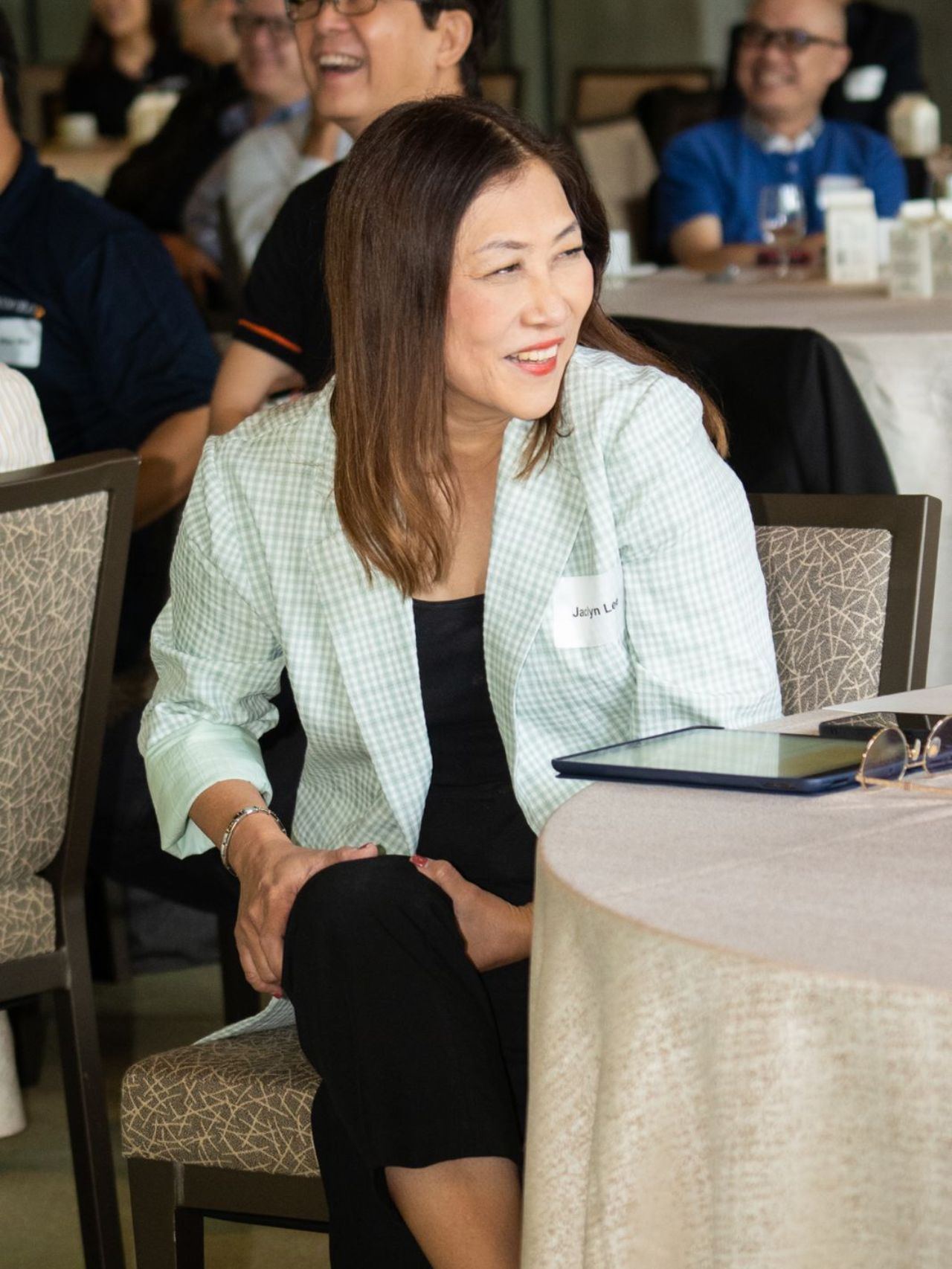
Dr Jaclyn Lee’s perspective on HR leadership is particularly relevant to organisations seeking to respond confidently to uncertainty.
A future-ready organisation cannot be created through structural change alone. It requires alignment between people, leadership, culture, business direction, and management systems.
This perspective positions HR as a strategic contributor rather than an administrative support function.
People leaders must understand commercial priorities, identify capability risks, challenge unrealistic assumptions, and help senior executives consider the human implications of business decisions.
They must also recognise that adaptability depends on trust.
Employees are more likely to learn, move between responsibilities, and contribute to unfamiliar work when they believe opportunities are allocated fairly and leaders communicate honestly.
Without trust, employees may protect their existing roles, withhold concerns, or avoid taking the risks required for innovation.
Dr Jaclyn Lee’s leadership insights also reinforce the importance of balancing organisational needs with employee development. Companies should not ask people to change continuously without providing support, clarity, and meaningful career pathways.
The strongest organisations create conditions in which business responsiveness and employee growth reinforce one another.
Looking Ahead
Uncertainty is unlikely to disappear. Technology will continue to reshape work, new capabilities will emerge, and organisations will need to make faster decisions without losing sight of long-term priorities.
The companies best prepared for this environment will not be those that restructure most frequently. They will be those that can understand emerging needs, move people and resources deliberately, develop relevant capabilities, and learn from evidence.
They will maintain enough stability to give employees confidence while creating enough flexibility to respond when conditions change.
Adaptability should therefore be treated as an organisational capability rather than a temporary initiative. It must be supported by strategy, leadership, learning, mobility, work design, technology, data, and culture.
When these elements are aligned, organisations can respond to disruption without sacrificing performance, trust, or future growth.
Frequently Asked Questions
What is workforce agility?
It is the ability of employees, teams, and organisational systems to adjust effectively when priorities, technology, customer requirements, or market conditions change.
Why is adaptability important for modern organisations?
It enables companies to respond faster, maintain continuity, address emerging capability needs, and take advantage of new opportunities without relying entirely on large-scale restructuring.
How can HR improve organisational responsiveness?
HR can connect business plans with capability requirements, strengthen internal movement, develop leaders, redesign roles, improve learning pathways, and align performance systems with desired behaviour.
What skills support an adaptable organisation?
Important capabilities include analytical thinking, collaboration, technological literacy, problem-solving, resilience, communication, curiosity, and the ability to learn continuously.
The exact combination should reflect the organisation’s strategy and industry.
What is the difference between agility and flexibility?
Flexibility generally refers to the ability to adjust an arrangement, such as working hours, location, or team structure. Agility includes the wider capacity to recognise change, make decisions, redeploy resources, learn, and maintain performance.
How does workforce planning support adaptability?
It helps leaders identify future talent demand, evaluate available supply, model alternative scenarios, anticipate gaps, and choose actions before shortages become urgent.
How can companies develop future-ready skills?
They can combine formal education with coaching, project work, mentoring, guided practice, internal movement, and opportunities to apply new capabilities in real situations.
What role do managers play?
Managers translate business priorities into daily work. They provide clarity, allocate resources, coach employees, reinforce behaviour, identify obstacles, and help teams respond to uncertainty.
Can small businesses use these strategies?
Yes. A smaller company can begin by identifying one critical business objective, assessing the work and capabilities required, and creating a focused plan for development, recruitment, redesign, or external support.
How should companies use AI when redesigning work?
They should examine individual tasks, identify where technology can provide reliable support, maintain clear human accountability, establish governance, and measure whether adoption improves meaningful outcomes.
How can leaders prevent change fatigue?
They can limit competing initiatives, clarify priorities, remove outdated work, provide realistic timelines, listen to employee concerns, and ensure teams have adequate time and resources.
Which metrics should organisations monitor?
Relevant measures include internal movement, critical-skill coverage, proficiency, leadership readiness, retention, decision speed, employee confidence, productivity, customer outcomes, and the ability to redeploy resources.
Is adaptability mainly an HR responsibility?
No. Senior leaders own strategic direction, managers guide local implementation, and employees contribute knowledge and learning. HR provides the frameworks and expertise needed to connect these groups.
How long does it take to build greater responsiveness?
Meaningful progress can begin within several months, but leadership behaviour, capability development, career systems, and cultural change require sustained effort over a longer period.
What is the biggest barrier to becoming more adaptable?
The most common barriers include unclear priorities, limited skills, slow decisions, weak management capability, outdated processes, fragmented data, and systems that reward old behaviour.
